Live and real-time video “WATCH” has become a critical layer of digital communication. From live streaming and remote monitoring to virtual classrooms and telemedicine, real-time video is now essential across industries.
The global live video and real-time streaming market is already valued in the tens of billions of USD, growing at double-digit annual rates, and expected to multiply over the next decade as low-latency video becomes standard for communication, learning, and operations.
Unlike VOD, WATCH operates under strict latency, bandwidth, and reliability constraints, making efficiency even more critical.
BECT WATCH reduces the data footprint of high-resolution, data-rich real-time video streams, enabling reliable delivery over cellular and satellite networks. The following statistics do not cover Home Land Security (HLS), Defense and Other government data.
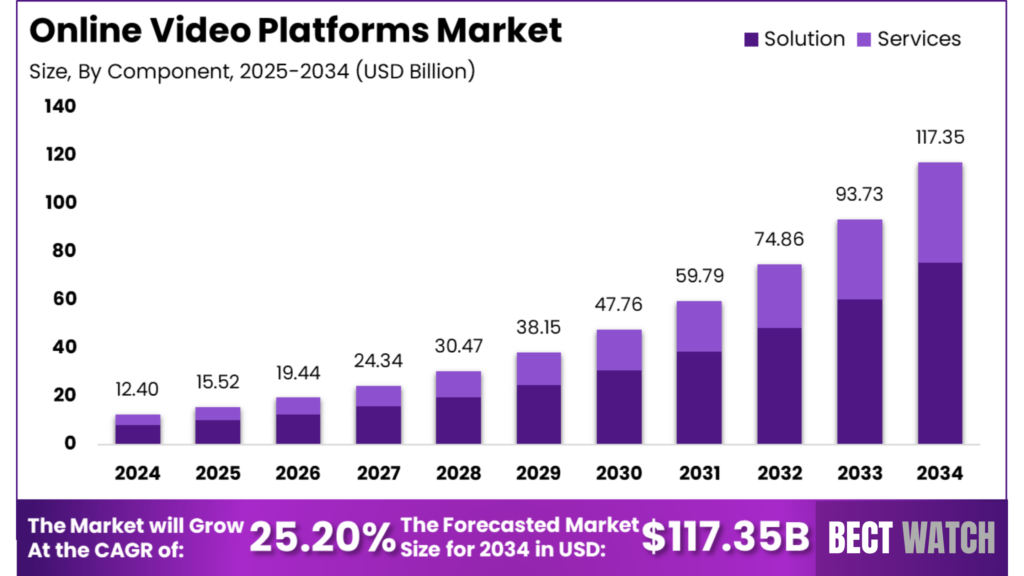
Real-time video has become a critical operational tool, not just a media feature. Today, live video is embedded across public safety, national infrastructure, defense, and regulated commercial environments.
Key applications include:
Across these sectors, live video is no longer optional, it is mandatory infrastructure for safety, compliance, coordination, and decision-making.
Live video systems face fundamental limitations:
Because WATCH operates in real time, traditional compression and delivery methods quickly reach their limits.
BECT WATCH was developed to optimize real-time video delivery at the data level, reducing footprint while preserving visual integrity and low latency.
With BECT WATCH:
This enables reliable real-time video where traditional systems struggle.
Most real-time video streams operate over cellular networks or satellite links, which are among the most expensive and bandwidth-limited communication channels. This is common in mobile surveillance, traffic monitoring, public safety, remote operations, and field deployments where fixed broadband is unavailable.
At the same time, modern live video increasingly carries high-resolution streams, high frame rates, and additional data layers such as tracking information, timestamps, sensor metadata, and analytical overlays. Together, these factors dramatically increase uplink demand, transmission cost, and sensitivity to network instability, especially in live scenarios where buffering is not an option.
BECT WATCH reduces the overall data footprint of real-time video, including both visual content and associated data, enabling reliable high-quality streaming over constrained networks. This lowers operational cost, improves stability, and makes real-time video practical and scalable even in bandwidth-limited or remote environments.
The following examples compare standard live video streams with BECT WATCH–optimized streams. Each comparison demonstrates significant data reduction while preserving clarity, motion, and real-time responsiveness.
As real-time video becomes central to education, healthcare, security, and live digital engagement, efficiency defines scalability. BECT WATCH enables next-generation live video by dramatically reducing data footprint while maintaining quality, making real-time communication accessible, stable, and sustainable at global scale.
Ready to explore further?
Take a closer look at how BECT delivers up to 80% lossless video reduction, built for environments where quality, security, and performance matter.
BECT helps organizations reduce video bandwidth and storage costs by up to 80%, without compromising quality or performance.
Take a quick look at where BECT delivers the most impact.